
Looking for a Custom Game Like Spot It? Here's How It Works
Searching for a custom Spot It game? Here's what can actually be customized, how photos become a finished matching game, and where this fits for business use.
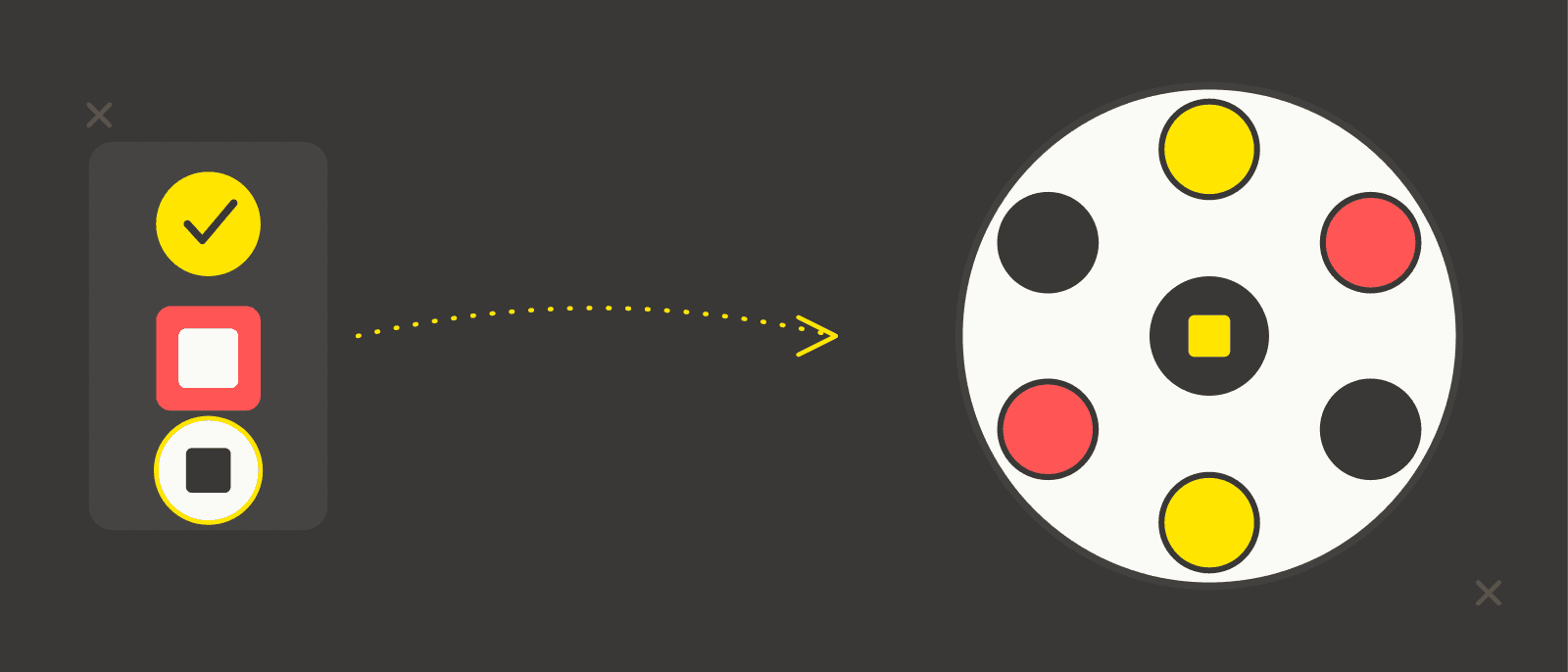
If you've searched for a "custom Spot It game," you're likely picturing the mechanic you already know — flip two cards, spot the one image they share — built around something specific to you or your business instead of the original game's abstract symbols. That's a real, buildable thing, and it's worth being clear about what it actually is: PairPops is an independent custom matching-game brand, not an official Spot It! product, and it isn't affiliated with, licensed by, or endorsed by the company that makes Spot It! or Dobble.
What People Usually Mean by a "Custom Spot It Game"
The search almost always means the same thing regardless of exact phrasing: people want the familiar fast-matching gameplay, but populated with their own content — team photos, product shots, a company's branding — rather than the generic symbol set the commercial game ships with. It's a request for personalization, not for a licensed edition of the trademarked product.
Custom Matching Game vs. Customized Official Game
These are two different things, and the distinction is worth being precise about (this isn't legal advice — just a factual description of what each option actually is). A customized official game would mean a licensed or branded edition produced with the involvement of the company that owns Spot It! or Dobble. An independent custom matching game — what PairPops and similar services actually offer — is a separately made product that uses the same public one-match concept with your own images. It doesn't carry the original brand, box, or symbol artwork, and it isn't produced in partnership with the companies that make those games.
What Can Be Customized?
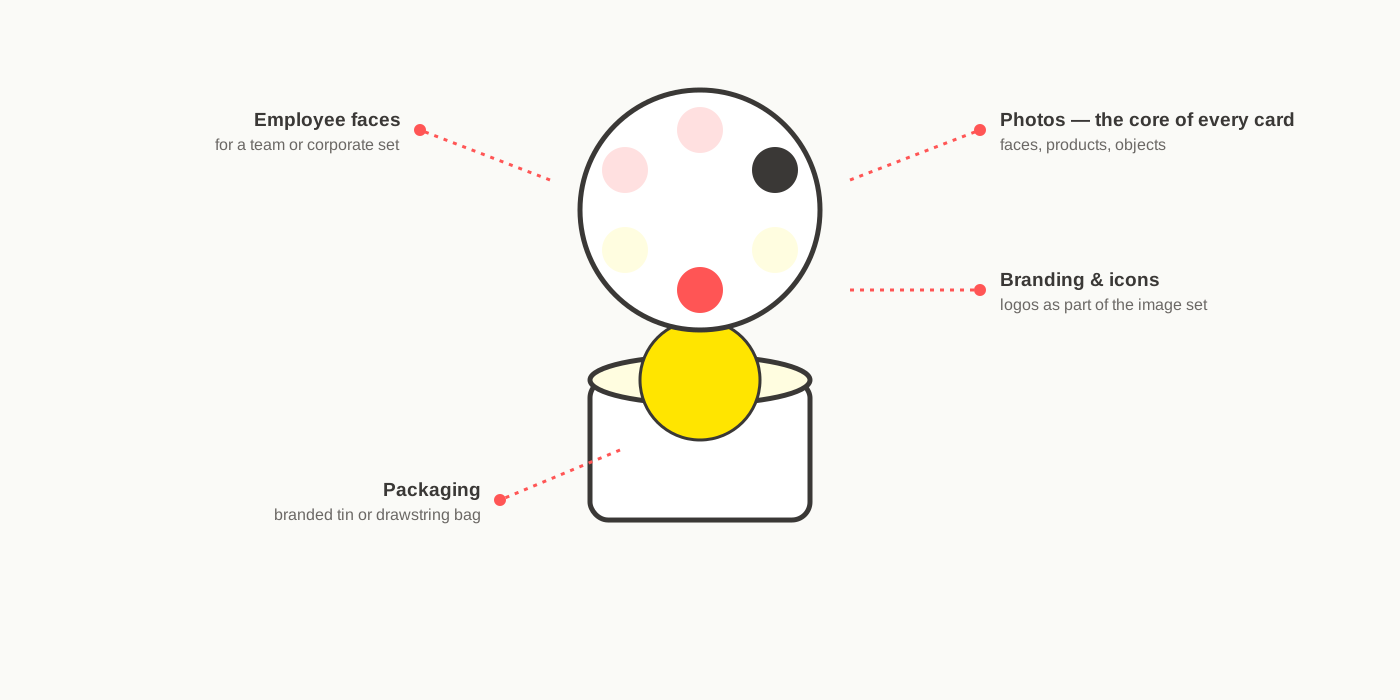
Based on how PairPops actually works, the customizable elements are:
- Photos — the core of every set, whatever images you provide
- Employee faces — headshots for a team or company version
- Product imagery — packaging shots, product photography, catalog images
- Company icons and branding — logos and brand marks as part of the image set
- Packaging — the finished set ships in a branded tin or drawstring bag
Anything not listed here — beyond what's described on the how-it-works page — isn't something we're confirming as an option; check directly before assuming a specific customization is available.
How Your Photos Become a Matching Game
Photos come in and get arranged onto round, white discs — several images per disc, positioned radially near the edge so the eye can scan the whole card at once — following a layout that mathematically guarantees the one-match property. That layout goes through a design proof before anything prints. You review that proof — seeing your actual images on the discs — and approve it before production starts. Once approved, the set is produced and shipped. See the full process for the exact steps.
How Does the One-Match Principle Work?
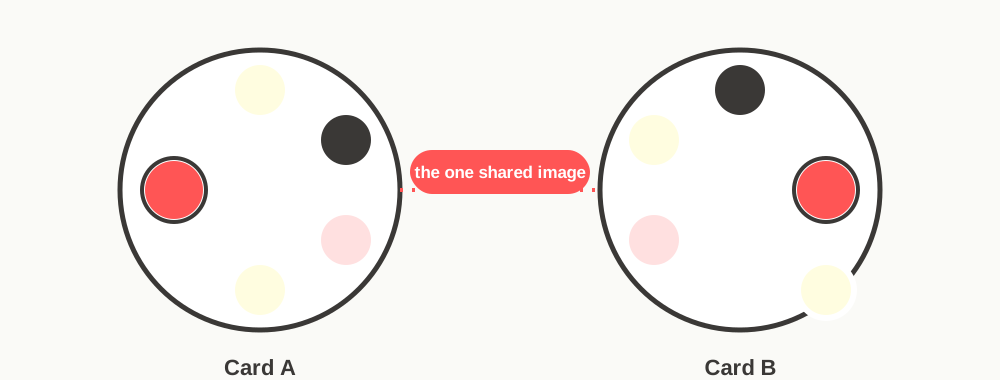
Any two cards in the deck always share exactly one image — never zero, never two. The guarantee comes from finite projective plane geometry, and it holds regardless of what images populate the deck, which is exactly why a personalized version works at all. The full math is covered separately if you want the mechanics in depth.
Best Uses for a Custom Visual Matching Game
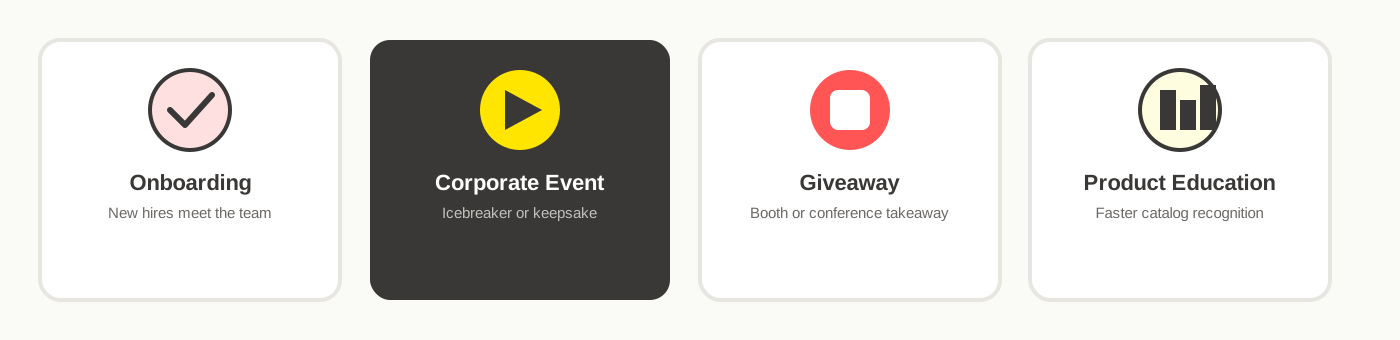
Employee onboarding
New hires learn faces and names faster than a slide deck manages, structured into a real onboarding activity.
Team building
A team photo deck works for offsites, department gatherings, or a standing desk game — no facilitator required.
Corporate events
A branded activity for a company party or milestone celebration that doubles as a keepsake.
Conference giveaways
A booth giveaway built around product or brand imagery — more memorable than a branded pen, and it gets played rather than discarded.
Product education
A deck of product or SKU photography that gets a sales or support team faster at recognizing a full catalog by sight.
Brand activations
Logos, mascots, or campaign assets as the image set for an event booth or marketing activation.
Customer gifts
A client appreciation gift built around shared history, product imagery, or brand assets.
Here's a hypothetical illustration of how this could apply: a footwear brand could create a game using photos of different shoe models and hand it out at a launch event. To be clear, this is a hypothetical scenario for illustration only — we're not claiming any specific brand as a PairPops customer.
What Makes a Custom Matching Game Feel Professional?
A handful of details separate a polished set from an amateur one — and they're mostly things you can spot before you order, not just after:
| Quality signal | Amateur-feeling result | Professional-feeling result |
|---|---|---|
| Image consistency | Mixed crop styles and framing across cards | Every photo cropped and framed the same way |
| Contrast | Images blend into the card background | Every image stands out clearly at a glance |
| Clean crops | Subjects distant, cut off, or off-center | Subjects centered and filling the frame |
| Branding consistency | Logos or colors that drift between cards | Brand elements matching across every card |
| Legibility | Images hard to identify mid-game, across a table | Every image instantly recognizable |
| Print quality | Visible pixelation or color banding | Sharp, accurate reproduction |
| Repeated-copy consistency | Each hand-cut copy looks slightly different | Every copy in the order looks identical |
The last row is one of the clearest practical differences between a hand-cut DIY deck and a professionally produced one: consistency across multiple copies is difficult to guarantee by hand, and straightforward when the layout and cutting are handled the same way every time.
DIY Generator vs. Professional Custom Production
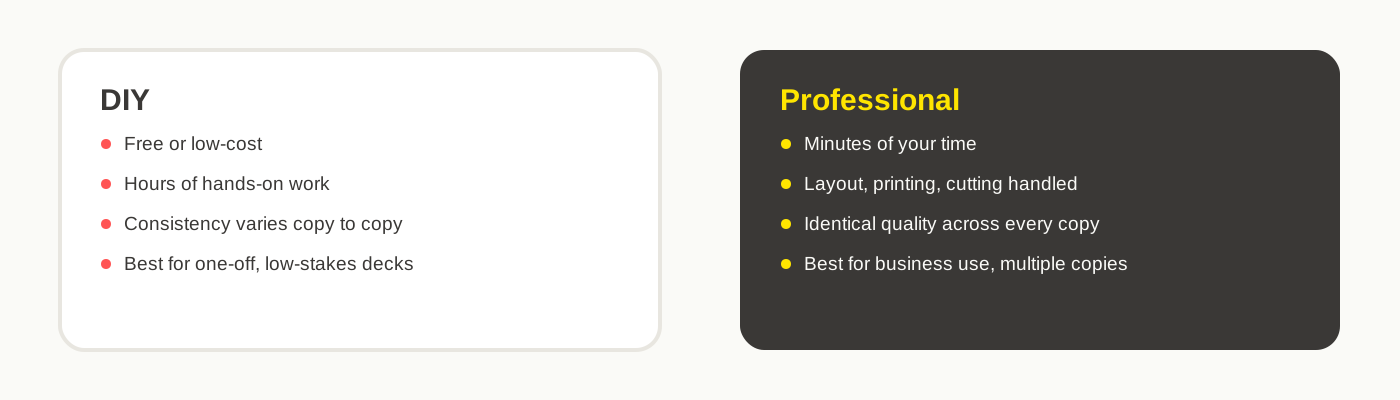
Both routes get you to a working deck, and the trade-offs are mostly about time, consistency, and how many copies you need. If you want the full comparison — free generators, manual builds, home printing, and where professional production fits — we've covered it in detail separately rather than repeating it here. The short version for a business use case: DIY works fine for a single low-stakes deck; professional production is the more reliable choice once you need multiple identical copies or a finish that has to hold up to repeated handling.
See Your Own Game Before You Order
You can see exactly what your photos, products, or branding would look like as a finished set before paying anything. Get a free mockup — typically back within 1 business day, with nothing produced until you approve it.
Frequently Asked Questions
Can I create a custom game like Spot It?
Yes. You can build an independent visual matching game using your own photos or branding, following the same fast one-match mechanic. It won't be a Spot It! or Dobble product, but the underlying gameplay concept works the same way.
Can I use my own employee photos?
Yes. Employee headshots are a common image set for a corporate version, often mixed with company logos.
Can I use product images?
Yes. Product photography works the same way as any other image in the set, and is a common choice for product-education use cases.
Can I add company branding?
Yes. Logos and brand icons can be part of the image set, and the finished set ships in a branded tin or drawstring bag.
How many images do I need?
It depends on the deck size — free tools commonly offer 13-, 31-, and 57-image tiers. The full mathematical structure uses 57; the commercial Spot It!/Dobble game itself uses 55 cards. PairPops' own custom games are always built on the full 57-image structure.
Can I preview it?
Yes. With PairPops, a free digital mockup shows your actual photos arranged on the discs before anything is printed — typically within 1 business day, with no commitment at that stage.
Is PairPops affiliated with Spot It! or Dobble?
No. PairPops is an independent custom matching-game brand and is not affiliated with, licensed by, or endorsed by Spot It! or Dobble.