
You hired someone. They seemed like the right fit. Three weeks later, they're updating their LinkedIn. You never got a clear answer — just something vague about "another opportunity." And you're sitting with a recruiting cost, a team gap, and the uneasy sense that this was preventable.
It almost certainly was. The research on early attrition is remarkably consistent: the same failure modes appear over and over, across industries and company sizes, and almost none of them are about compensation. They're about what happens — and doesn't happen — in the first 30 days.
Before the mistakes: the framework that connects them.
The 3-Layer Onboarding Stack
Most onboarding programs address only one or two of the three things new hires actually need to stay:
Layer 1 — Operational: Can they do their job? Systems access, tools, role clarity, first assignment. Most programs get this right.
Layer 2 — Organizational: Do they understand the company? Culture, values, processes, how decisions get made. Most programs get this partially right.
Layer 3 — Social: Do they feel like they belong to their team? Do they know people's names and faces? Do they have a friend at work? Almost no program gets this right.
The 3-Layer Onboarding Stack is the diagnostic lens: when a new hire leaves at 60 days, ask which layer failed. You'll almost always find the answer in Layer 3. The social layer is the one that drives 90-day retention and the one that most onboarding programs treat as optional. It's not optional. It's the load-bearing wall.
Mistake 1: Information Overload on Day One
The instinct is understandable — there's so much a new hire needs to know, so you pack it all into the first day. Benefits enrollment, HR compliance, IT setup, role documentation, company history, culture overview. Six hours of content in a person already running at maximum cognitive load just from being new.
What actually happens: the new hire retains almost nothing and leaves day one feeling overwhelmed. The message absorbed by their nervous system is: this place is a lot. That feeling is the first seed of doubt. And the seed plants itself at the exact moment when first impressions are forming most powerfully.
The counterintuitive fix: do less on day one. Lead with the team introduction. Reserve admin for the afternoon. A new hire who leaves day one feeling welcomed and connected will remember that experience. A new hire who leaves having scrolled through 40 pages of policy documentation will remember the paperwork.
Mistake 2: No Social Introduction in the First Week
This is the highest-impact mistake and the most common. SHRM data shows that 17% of new hires specifically cite the absence of friendly or helpful coworkers as a reason for leaving. Gallup research shows only 12% of employees strongly agree their company does a great job onboarding — the gap is almost always in the social layer.
Most programs include a team lunch. What they don't include is a structured activity that actually encodes names and faces. A team lunch without structure is 30 minutes of four conversations happening around a table — the new hire learns two names out of fifteen, none of them deeply enough to recognize them in the hallway tomorrow.
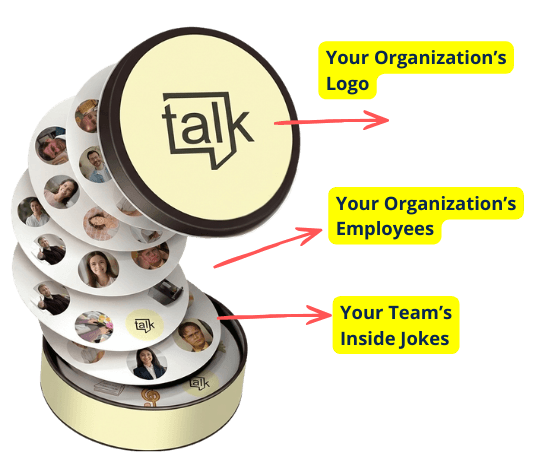
What works instead is an activity where learning names happens through active engagement rather than passive listening. A personalized icebreaker game made from your team's headshots — one where the new hire races to match faces to names under time pressure — encodes the team in a way that a round of introductions never does. The employee onboarding game is built for exactly this moment: 20 minutes, no facilitation, and a new hire who can name the room at the end of it.
Mistake 3: Unclear Expectations About the First 30 Days
A pattern in exit interviews: "I didn't know what I was supposed to be doing. I was scared I wasn't contributing enough. I started wondering if I'd made a mistake."
New hires don't need a perfect 30-day plan. They need clarity on what success looks like. One deliverable. One relationship to build. One thing to learn. Without this, the first month is an anxiety-producing fog of not knowing whether the right things are happening.
The fix is a one-page 30-day expectations document written by the manager before the start date. It should answer: what will this person be doing, what will they have accomplished, who will they know, and what does the manager need from them in month one? Twenty minutes to write. Eliminates 30 days of ambient uncertainty.
Mistake 4: Manager Absence in Week One
The scenario: the manager is busy, so the new hire is handed to HR for orientation, then to IT for setup, then told to "get comfortable" and "reach out if you have questions." The manager appears for a 30-minute call on day two and disappears into their calendar.
New hires read manager absence in week one as a signal about how the relationship will work going forward. If the message in week one is "you're not a priority right now," that shapes the new hire's read of their position in the organization for the entire first month.
Gallup found that when managers take an active role in onboarding, employees are 3.4 times more likely to say the process was successful. The minimum viable version: one genuine conversation per day for the first five days. Not a status check — a conversation. "How did today feel? What questions came up? What's still confusing?" Ten to fifteen minutes is enough. Consistency is the signal.
Mistake 5: Onboarding That Ends After Week One
Week-one orientation is not onboarding. Onboarding is the full process of integrating someone into their role and team — which takes at least 30 days and often 90. Most companies deliver one week of orientation and consider the person "onboarded." What actually happens: the new hire is dropped into the team without the scaffolding that would help them succeed, at the exact moment when the initial adrenaline of a new job has worn off.
SHRM research shows that 83% of high-performing organizations begin onboarding before the start date, and only 15% of companies continue onboarding beyond six months. The most common structural gap: no check-in at day 30, no retrospective conversation, no continued buddy relationship, no cross-functional introductions after week one.
The fix is minimal: a 30-day retrospective conversation (three questions: what worked, what was confusing, what do you wish you'd known on day one), a second assignment with a real deliverable in weeks two or three, and a check-in that confirms the onboarding buddy relationship is still active. The full timeline is in the employee onboarding checklist.
Which Layer Is Your Program Missing?
| Failure Mode | Which Layer | Signal in Exit Interviews | Fix |
|---|---|---|---|
| Information overload on day one | Operational | "It was overwhelming. I felt behind from day one." | Reorder day-one agenda; connection first |
| No social introduction in week one | Social | "I still didn't really know anyone after 3 weeks." | Add structured intro activity; personalized game |
| Unclear 30-day expectations | Operational | "I didn't know if I was doing the right things." | 30-day expectations doc written before start date |
| Manager absence in week one | Social + Org | "My manager was barely around that first week." | Daily 15-min manager check-ins, all of week one |
| Onboarding ends after week one | All three | "After orientation it felt like I was on my own." | 30-day retro + continued buddy + second assignment |
3 Ways Companies Accidentally Undo Good Onboarding in Week One
Even when the checklist is right, execution undoes the program. The three most common week-one saboteurs:
First: the manager attends day-one orientation and then disappears. The message: "Your first day mattered. Your second day didn't." Daily check-ins in week one exist specifically to prevent this signal.
Second: the team introduction activity is scheduled for Friday instead of day one. By Friday, the new hire has already formed their social read of the team from unstructured observation. A structured introduction on Friday lands differently than one on day one — it's no longer an introduction, it's a catch-up.
Third: the onboarding buddy is assigned but not briefed. An onboarding buddy who doesn't know their expectations — specifically, that they're available throughout week one and should reach out proactively — provides the same experience as no buddy at all. Brief the buddy before the new hire starts.
When Onboarding Can't Fix the Problem
Onboarding doesn't fix a broken hire. If the role was misrepresented in the interview process, if the manager relationship is fundamentally mismatched, or if the compensation is out of market the day the offer letter was signed — onboarding can delay the departure but not prevent it. The research on early attrition consistently separates "job not what I expected" from "onboarding failed me." Both drive 90-day turnover, but only the second one is fixable by improving the onboarding program. Start with exit interview data to confirm which problem you're actually solving.
Practical Scenario: Cascara Health's Social Layer Fix
Hypothetical example, for illustration only — Cascara Health is not an actual PairPops customer, and these figures are not measured results.
Cascara Health is a 75-person digital health company in Seattle that was losing 29% of new hires before day 90. Exit interviews were consistent: people didn't feel connected to their team in the first two weeks. Their previous onboarding included a one-day orientation, an IT setup session, and a standing Friday lunch. No structured social introduction. The fix: they added a team matching game (built from headshots of the existing team) to the welcome kit, shipped to every new hire's home before their start date. They also restructured day one to open with a 20-minute game session. 90-day retention climbed to 84% in the two quarters after implementation. The People Ops lead noted that the 30-day pulse survey scores on "I feel connected to my team" jumped from 3.1 to 4.2 out of 5 — before the new hire had attended a single all-hands meeting.
Frequently Asked Questions
What percentage of new hires quit in the first 90 days?
SHRM data shows roughly 20% of employee turnover happens within the first 45 days. Separate SHRM research found that about one-third of new hires quit within their first six months, with 16–17% leaving between week one and month three. The 90-day window is the highest-risk period, and research shows 86% of new hires decide whether to stay long-term within the first six months of employment.
What is the most common reason new hires leave in the first 90 days?
Social isolation — not knowing or feeling connected to their team — is the most consistently cited factor. A SHRM study found 17% of departing new hires specifically named the absence of friendly or helpful coworkers. Unclear role expectations and a gap between the job as described in interviews and the actual day-to-day work are the next most common drivers.
How much does it cost when a new hire quits in the first 90 days?
SHRM estimates six to nine months of salary to identify and onboard a replacement. For a mid-level hire at $80,000 per year, that's $40,000–$60,000 per early departure — before accounting for lost productivity, disruption to the team, or recruiter fees. A new hire who quits at day 60 represents nearly the full replacement cost with almost none of the return on the hiring investment.
Does onboarding really affect retention, or is this correlation?
The data is strong enough to be treated as causal. SHRM research shows employees who complete a structured onboarding program are 58% more likely to still be with the company after three years. Gallup found that manager involvement in onboarding makes new hires 3.4 times more likely to call the process successful. The mechanism is well-understood: structured onboarding reduces the ambiguity and social isolation that drive early departure decisions.
How do you fix an onboarding program that is not retaining people?
Run structured exit interviews with every person who left in the first 90 days and look for patterns across the 3-Layer Onboarding Stack. Most companies find the same two or three failure modes. Fix the most common pattern first. A structured team introduction activity on day one — one that encodes names and faces through active engagement rather than passive introductions — is usually the highest-ROI single change because it addresses the social layer failure before it becomes a departure decision.